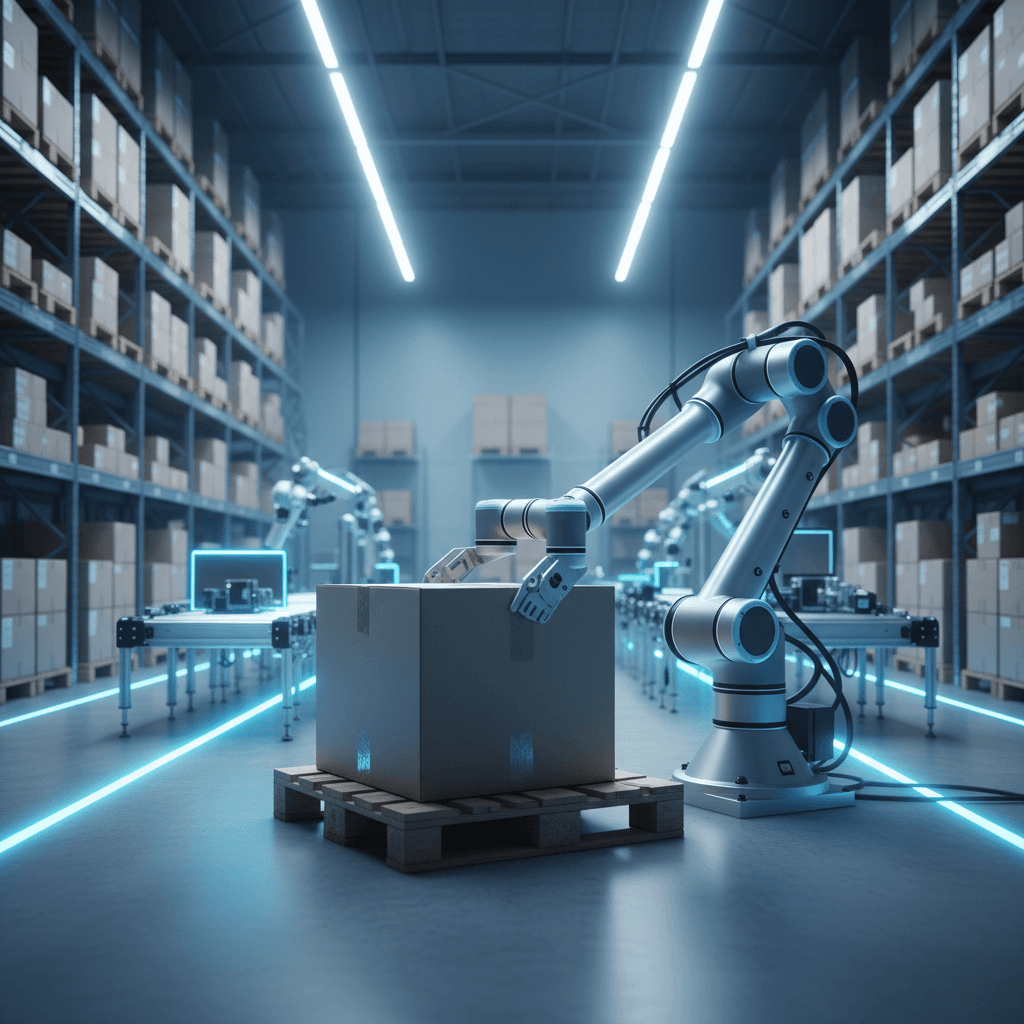
Cobot Palletizers Built for the Modern Production Floor
Automate end-of-line palletizing with collaborative robots that work safely alongside your team. Faster deployment, lower cost, and no safety fencing required.
What Are Cobot Palletizers?
Cobot palletizers are collaborative robots designed to automate the stacking of cases, cartons, bags, and other products onto pallets at the end of a production line. Unlike traditional industrial palletizing robots that require safety cages and dedicated floor space, cobots use force-limiting technology to operate safely alongside human workers.
The result is a palletizing solution that combines robotic precision with the flexibility to share workspace with operators. Cobot palletizers are designed for mid-volume production environments where labor shortages, floor space constraints, and the need for frequent product changeovers make traditional automation impractical or too expensive.
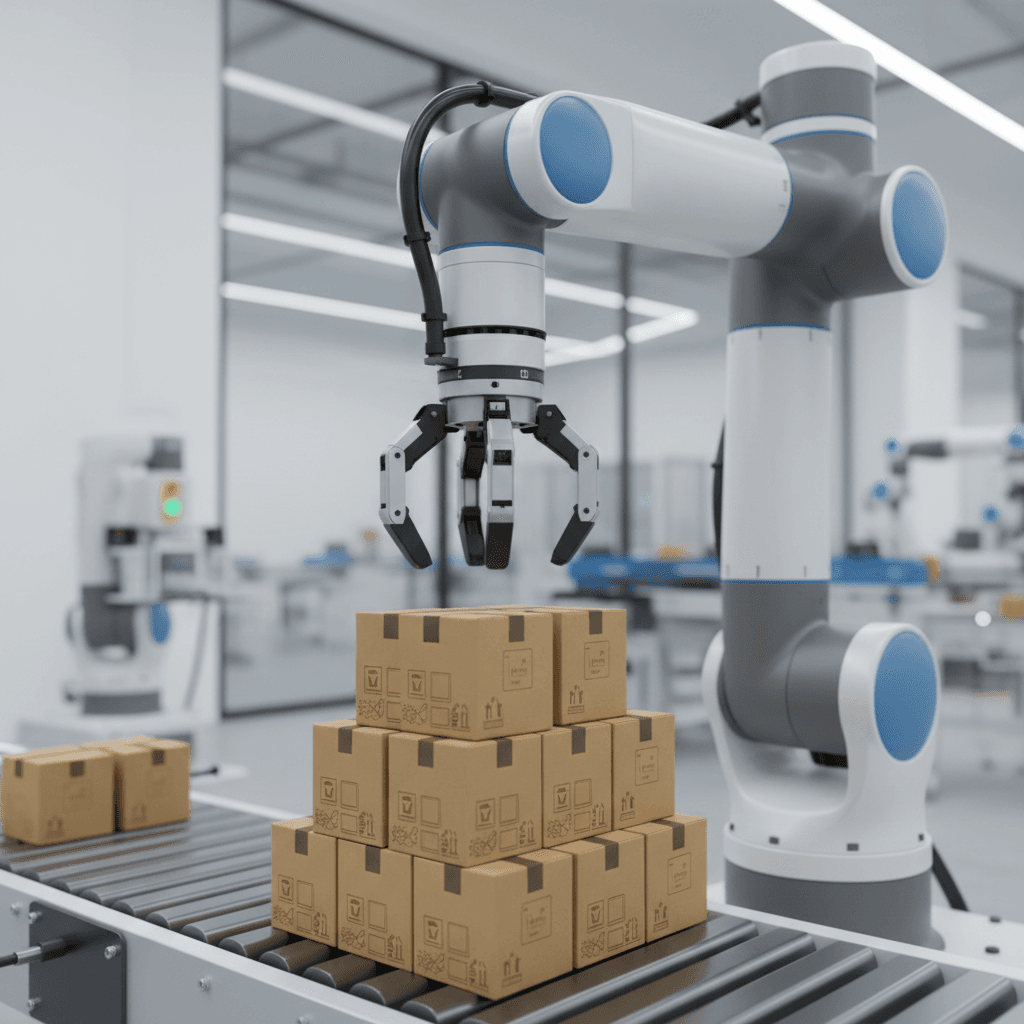
Why Choose Cobot Palletizers
Collaborative palletizing delivers the automation benefits manufacturers need without the complexity and cost of traditional industrial robots.
Safe Around Workers
Cobot palletizers operate safely alongside human workers without the need for cages or safety fencing. Built-in force-limiting sensors stop the arm on contact, enabling true human-robot collaboration on the production floor.
Fast Deployment
Deploy a cobot palletizer in days, not months. Intuitive teach pendants and drag-to-program interfaces let operators configure new pallet patterns without writing a single line of code.
Flexible & Reconfigurable
Easily switch between product types, box sizes, and pallet configurations. Cobot palletizers adapt to changing production needs without costly retooling or extended downtime.
Lower Total Cost
Compared to traditional industrial palletizing robots, cobots require less floor space, no safety infrastructure, and minimal integration engineering. ROI is typically measured in months, not years.
Easy Integration
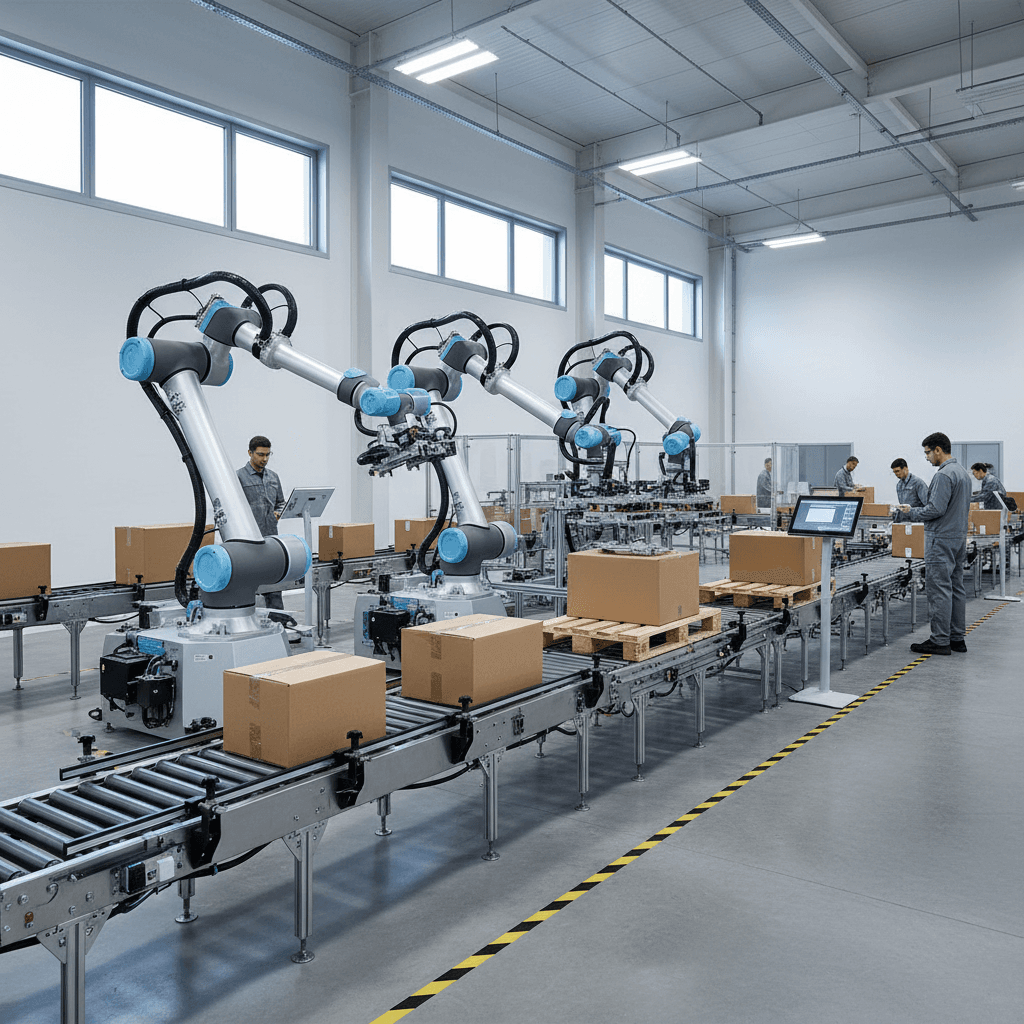
Cobot palletizers connect to existing conveyor lines, vision systems, and warehouse management software. Standard communication protocols make integration straightforward with any production environment.
Consistent Throughput
Eliminate variability in palletizing speed and stacking accuracy. Cobots run shift after shift with the same precision, reducing product damage and improving pallet stability for shipping.
How Cobot Palletizing Works
A streamlined, four-step process that transforms manual palletizing into a repeatable, automated operation.
Product Infeed
Cases, bags, or cartons arrive via conveyor belt. Vision sensors or fixed guides position each item for pickup by the cobot arm.
Robotic Pickup
The cobot arm uses a gripper, vacuum, or clamp end-effector to lift the product. Force sensors ensure a secure grip without crushing or deforming the item.
Pattern Placement
Pre-programmed pallet patterns guide placement. The cobot stacks each layer with millimeter accuracy, optimizing pallet density and stability for transport.
Pallet Changeover
When a pallet is complete, the system signals for removal and an empty pallet is loaded. Changeover takes seconds, keeping the line running with minimal interruption.
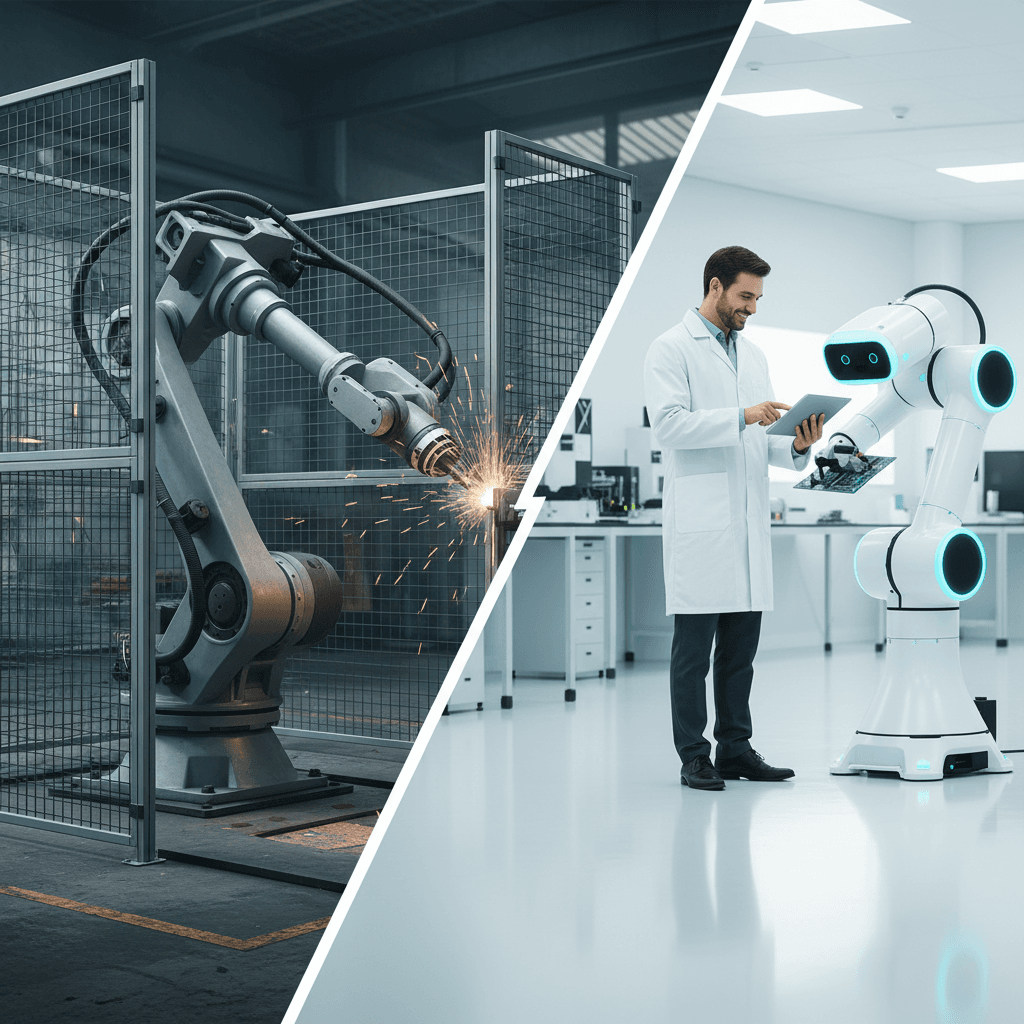
Cobot vs. Traditional Palletizers
Traditional industrial palletizers have been the standard for decades. Cobot palletizers are a newer category that trades raw speed for safety, flexibility, and lower total cost.
| Factor | Cobot | Traditional |
|---|---|---|
| Safety Fencing | Not required | Required |
| Setup Time | 1-5 days | 4-12 weeks |
| Speed | 6-14 cycles/min | 20-60 cycles/min |
| Payload | Up to 50 kg | Up to 700 kg |
| Floor Space | Compact | Large footprint |
| Changeover | Minutes | Hours |
| Typical Cost | $50K-$150K | $200K-$500K+ |
Applications Across Industries
Cobot palletizers solve the same core problem everywhere: getting products from conveyor to pallet reliably and affordably, without adding headcount.
Food & Beverage
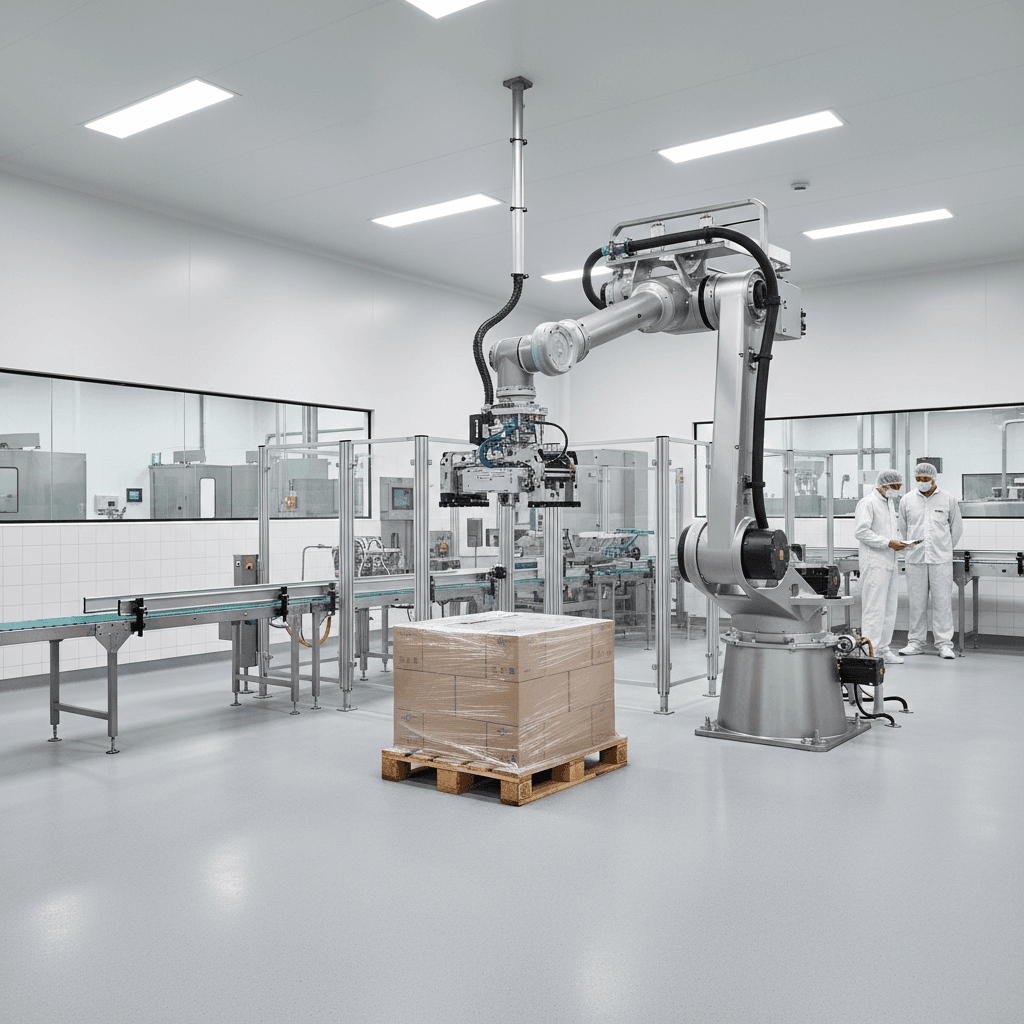
Palletize cases of beverages, snack foods, frozen products, and bakery goods. Hygienic design options and washdown-ready models meet food safety requirements while automating one of the most physically demanding tasks in the plant.
Pharmaceuticals & Healthcare
Handle cases of medical devices, pharmaceutical cartons, and healthcare supplies with the precision and traceability that regulated industries demand. Cobots reduce contamination risk from manual handling.
Logistics & Distribution
Automate pallet building in distribution centers handling mixed-SKU orders. Cobot palletizers sort and stack cases from multiple lines onto outbound pallets, reducing labor costs in high-turnover environments.
General Manufacturing
From consumer goods to building materials, cobot palletizers handle the end-of-line stacking that manufacturers struggle to staff. Modular designs scale from single-line cells to multi-line installations.
Purpose-Built for Food & Beverage
Food and beverage is the largest adopter of cobot palletizers. The combination of high product variability, strict hygiene requirements, and persistent labor shortages makes collaborative automation a natural fit.
- Stainless steel and washdown-rated models for sanitary environments
- FDA and USDA compliance-ready designs
- Handles cases, trays, bags, and shrink-wrapped bundles
- Quick changeover between product SKUs and pallet configurations
- Integrates with existing conveyor and case erector systems
- Vision-guided picking for variable product positioning
Seamless Production Line Integration
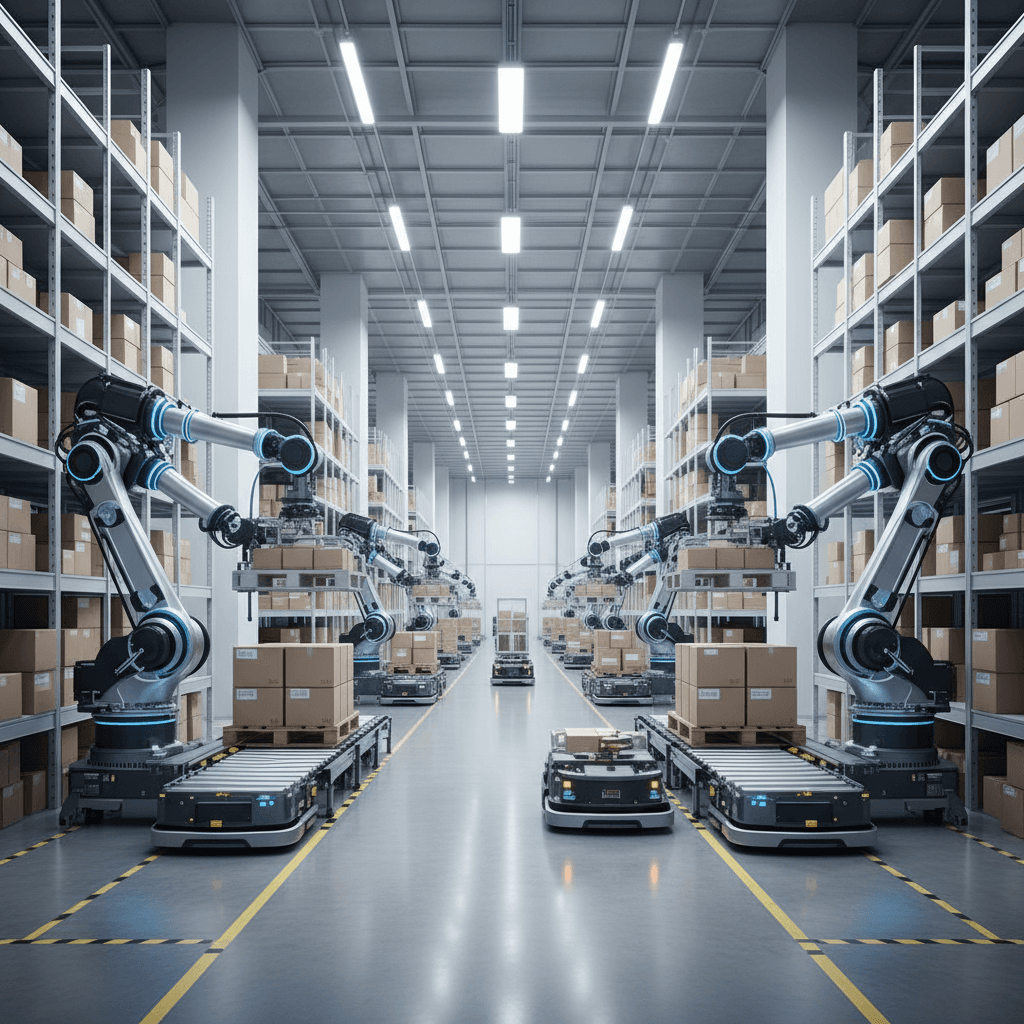
Cobot palletizers are designed to drop into existing production environments. Standard industrial communication protocols and modular mechanical interfaces mean you can automate palletizing without re-engineering the rest of the line.
Frequently Asked Questions
Common questions about cobot palletizers, from payload capacity to ROI.
Get a Cobot Palletizer Quote
Tell us about your palletizing requirements and we will connect you with the right solution. Every inquiry receives a response within one business day.